AI has taste now, too
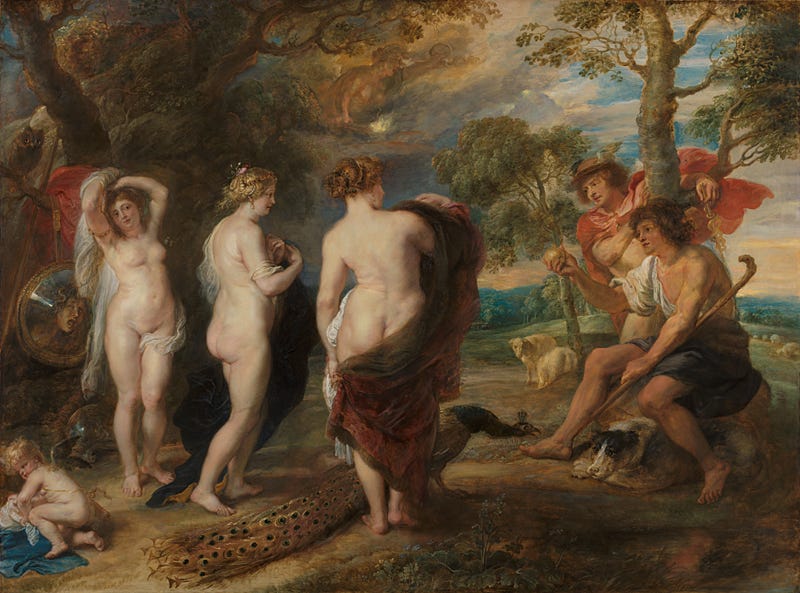
People routinely underestimate the rate of AI progress. AI now has superhuman skills in coding, design, writing, research, diagnostics, realistic image generation, and much more. Many of these abilities were confidently proclaimed to be impossible just months before AI gained these capabilities.
Still people think “it can do that job, but it can’t do my job.” In some cases this is pure delusion: yes it can do your job at the slide farm, you are not special.
(In many cases this opinion arises because people are rarely using frontier models. A friend working at a major multinational insurer complained that her AI-generated meeting minutes were full of hallucinations. Turns out they were using GPT 4.1 nano, a model that is small and months old.)
A more reasonable objection is that AI lacks taste. Yes, it can pull together PhD-level research reports and write functional code and write emails. But if you’re a tastemaker, you have an edge on an LLM which is post-trained to produce text which is somewhat milquetoast, aimed to appease the median user of a helpful, harmless and honest AI.
Craft taste and editorial taste
Craft taste refers to judgements about form once the target and context are fixed. Typography, prose rhythm, tight design, code that works. Image models couldn’t reliably produce hands with the right number of fingers a couple of years ago. This is a load-bearing part of many people’s confident claims that AI will never replace humans in specific domains – specifically the combination of aesthetic taste and competent execution – and is now largely dead.
Editorial taste refers to judgements about content. In a blog post or a report, it might be what gets kept or emphasised versus what ends up on the cutting room floor. How to design a website so it appeals to your target audience and speaks their language, or marketing copy which emphasises the right set of features in the right register.
AI can sort of do this. It can exercise good judgement about interesting writing and copy. People lean on it heavily as a sparring partner when thinking through a tricky problem. Sometimes people even have a revealed preference for LLM slop – notice how every post on LinkedIn now apes ChatGPT’s particular style as though it’s a new brand of corporate-speak. Most professional writing is taste-neutral and LLMs are perfectly good at replicating it.
People whose roles lean heavily on editorial taste are harder to ape. These roles require having some insight into their domain in a way that lets them make picks, sometimes even unpopular ones. They’re using knowledge which is hard to capture cleanly and so hard to replicate, to find things which they think will appeal to their particular ingroup. At the extreme end they can pick unpopular things that are on the edge of what’s appealing and bring them into the zeitgeist.
Fashion is a good example of this. Fashion houses make design choices which are outré and even derided by most people. But these choices, in time, propagate into the common memeplex and start to take over clothing designs for regular people.
Scott Alexander suggests that fashion choices are about attempting to look like a member of a higher class, and avoiding being seen as a member of a lower class. The upper class starts to wear something new. In time this propagate down to the middle class, who want to look like the upper classes, so copy their outfits. The lower classes do this in turn, and the upper class, not wishing to be seen as lower class, change their fashion again and the cycle repeats.
Taste as zeitgeist
Having “good taste” often means being plugged into the zeitgeist of what groups think specific things are fashionable and then ensuring you don’t seem gauche by association with them. This happens in domains which aren’t drawn across class lines: having “good taste” in music is often about having eclectic and non-mainstream taste, signalling you’re not into the shit that’s on the charts.
This is also the case in e.g. visual design. New and interesting designs start to be used on websites (parallax scroll, how cool!), they get reproduced everywhere (god, another website using parallax scroll) and so become passé, designers start to create new and unusual (but still mostly aesthetically pleasing) designs to distinguish themselves, and so on.
Being plugged into the zeitgeist is something that humans are extremely good at. AI could also be good at this: as each model is trained and finetuned, it starts to get a sense of what’s stylish and what isn’t, and with some shrewd prompting you can get designs which are both aesthetically pleasing and editorially tasteful.
As long as LLMs are trained to be maximally inoffensive they won’t ever be able to compete here, as what’s tasteful and in fashion is often deliberately out of distribution of what the average person likes. The post-training that models are subject to makes them too milquetoast for them to do this; these picks are anti-mass appeal.
But it’s not clear to me that AI couldn’t do what tastemakers are doing. They’re trained on a gigantic corpus which includes essentially all of the tastemaker content that’s ever been created. They’ve read all of Vogue, the Pitchfork archives, weird Substacks, academic crits, Sontag. ‘Tastemaker output’ is well within the capabilities of these models but is locked behind the RLHF layer that pushes them to be mid.
Tastemakers survive, for now
The consultant who needs to write decent marketing copy or produce a slide deck in keeping with her company’s brand guidelines is fully replaceable. Those jobs are about craft and good aesthetics, and the taste they were aiming for is exactly the kind of thing that LLMs are optimised for: tasteful designs, pleasant copy, and superhuman execution.
If your role involves you being a tastemaker, AI hasn’t yet caught up to you. Think: the fashion designer who needs to be at the cutting edge of trends, A-list creative directors, editorial directors. LLMs’ inability to ape this kind of curation is protecting these jobs.
But the number of such jobs is much smaller than most people think. Most who raise the objection of “taste” are referring to the kind of taste which is now fully replicable by AI.
Plenty of mass media doesn’t even require a great deal of cutting-edge taste – see every reality TV show of the last few years which are essentially the same set of conceits (put a bunch of hot people in a confined environment and get them to do stuff) with slight tweaks (on a boat, on an island, with their exes, while singing/dancing/baking).
And where taste really is still required, the surface area of what’s truly unique will shrink – the role of tastemakers will be to prompt LLMs in the right direction. Doing this still requires people with taste to guide the model in the right direction – you can’t prompt your way to taste you don’t have (for now). Tastemakers provide a signal that models can’t predict.
But as tastemakers are increasingly able to get tasteful output from LLMs, we’ll just need fewer of them. Readers’ attention is finite and the world only needs so many hot takes on the latest A24 release. If one creative director with Claude can do the work of a creative director plus three juniors, the juniors are the ones who are cooked.
1 comment
How much research taste do you think LLMs have?
Reply on Substack →