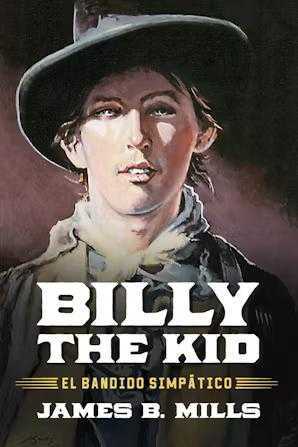
I needed a bath after reading this book; it is the poetry accompaniment to The Revenant and Blood Meridian. Billy the Kid becomes sympathetic and human; at the same time, gross, cruel, and inhuman. What I like about the Western is its pretensions to universality: the southern cadence just makes things more… significant. The lone gunman is The Individual, the malignant Judge is Literally The Devil, and the depravity of the dogbreeder in collected poetry somehow transcends – or descends – into a kind of special and timeless hell.
It reminds me of competitions over who lives in rock bottom. Somewhere out there exists a place so depraved, so harsh, so cruel and unforgiving, that the people forged in it are superhuman, inhuman, monstrous. Their lived experience sufficiently extreme as to blast away the morals of everyday life in every moment big and small. A group who can be placed in any situation and will survive. Will dominate or kill. Cannot be reasoned with. Cannot be intimidated. Have nothing to lose and no human normality. Who might behave crazily and kill you for no reason. They are the lone man on the bridge, the threat in the distance, the fear of impending confrontation from the random interloper. The thing in the bushes. The blank threat which is capable of potentially anything.
At times it feels like Billy the kid is living in this world. The stench is palpable, the cruelty unimaginable. He kills without purpose. He is killed without purpose, included in a child’s list of ‘killed by me’, ‘me, killed by.’ He is childish, marvelling at nature and its wondrous patterns. Other times he is bemused, alienated. Confounded by a strange reality only he is privy to. People speak words which make no sense. Disgusting transmogrifications occur which only he witnesses. He is a friend to animals. He is transfixed by the beauty of the west. He is fucked, fucks, murders, gets shot, recovers, suffers, and you feel he is asking ‘queer, how this is all happening to me?’ No liquid is excluded – piss, blood, tea, mud, juice – and no line goes uncrossed. Then it goes normal. He lies in bed waiting for a friend. Visits a lover’s house. Complains about how he is dressed.
His pursuer, Gatton, is ‘the perfect assassin.’ He is portrayed again as an inhuman killing thing. He starts a joke – kills - and finishes the joke. He is friendly, he laughs, he assassinates. To him killing is ‘no big deal’ – it is a past-time. His friend is shot in the head by a target and he forgets to bury him. He does not hate his enemies or fear them. He simply understands them. He is precise and calculating and cutting. He sees everything. He is a match for billy the kid, living legend, small time crook turned archetype. He is the pursuer. The world isn’t free because somewhere, somewhen, we each have a personal Gatton coming for us. We cannot stop him: we will kill Gatton’s friends and he will forget them. He despises that which he does not perceive – the plants grow too slowly for Gatton.
The end is the best part. Billy, complex, flawed, dirty, cruel, confused, childish, innocent, loveable, detestable, cantankerous, bratty, adult, murderer, soldier, misunderstood, psychopath: worm, becomes something else. He becomes the hero of daring-do. The hero we root for, who defeats the bad hombre. Who is loved by the Spanish princess. Who is rugged, two-dimensional, loveable, independent. Who lives the fantasy, is the fantasy. Who is used to sell cigarettes and soaps. Who has become inexplicably, against all his just desserts, a living legend. Small time crook turned hero.