Digital poison
[Epistemic status: hammered out quickly, take with a handful of salt]
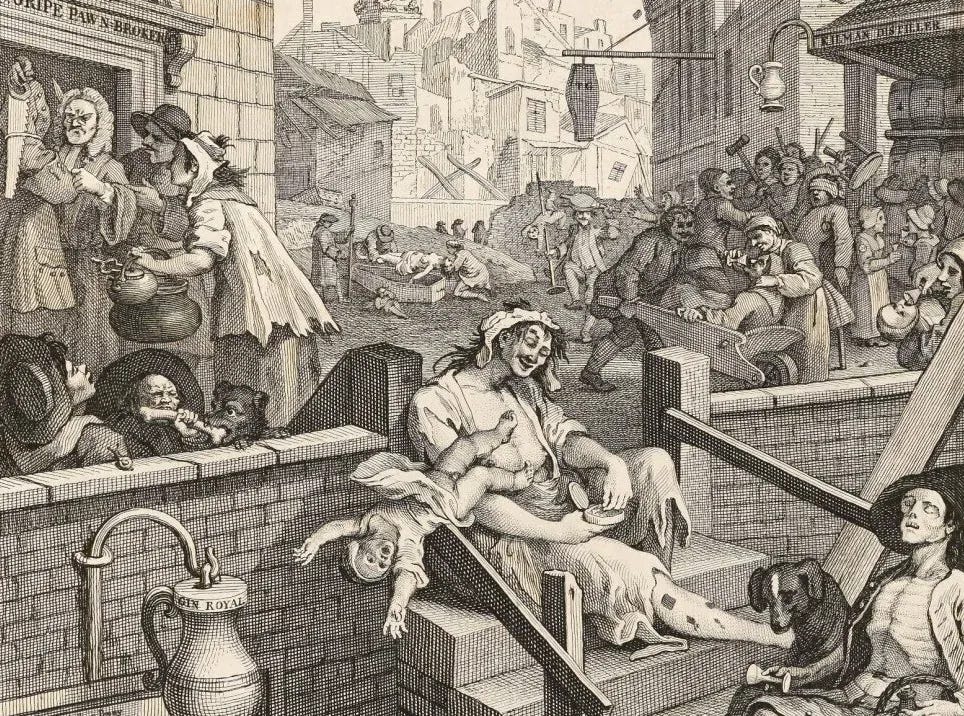
Alcohol and tobacco are poisons of antiquity we still willingly drug ourselves with. They’ve been around forever and may well be with us forever, such are their far-reaching cultural tentacles.
Of course there are plenty of poisons we willingly ingest – other drugs of all flavours, natural and synthetic, old and new. But we’ve also invented a uniquely modern kind of poison: digital ones.
I opened Instagram after being away from it for a few weeks. It’s a pattern that will be familiar to many: the app sucks you in; thanks to very shrewd UX choices a single tap on a friend’s video opens up reels, and then suddenly four hours has passed and your arm has gone numb from lying on it for so long. You feel a sense of gross residue from spending so long staring, idly consuming fifteen-second slop injections.
This shit is poison, you think. You’re disgusted with yourself for getting sucked back in again. You delete the app.
I reinstalled it to share one of my posts. The hit to my mood – not severe, but noticeable – happened almost instantly as my brain processed the various elements shown to me.
At the top: a series of profile pictures of people I don’t really know. Two of them are girls I met while travelling who didn’t want to sleep with me (actually one had terrible diarrhoea so that stung less). Scrolling sideways I find a London friend, not someone I know super well, planting some seedlings with friends. Though perfectly harmless, it jolts me out of my Californian reverie and makes me realise that life is moving on without me back in London.
The first post in my feed: my brother, grinning after having finished the London Marathon (two years ago; he’s reposting it as this year’s is coming up this weekend). It has half as many likes as my entire follower count. A bunch of comments, one of which talks about his cute smile. I don’t much like my smile.
The friendship paradox means that, for most people, your friends will have more friends than you do. Nowhere is this more obvious, rubbed in your face quite as much, as social media.
I want to delete my Instagram account but can’t quite bring myself to.
Maybe this is because I don’t want to eliminate myself from some people’s memories. Facebook is dead, none of my friends really use Twitter apart from me, so Instagram is the remaining thread between me and a few dozen people. I (mostly) like seeing their stories, seeing what they’re up to, things they wouldn’t think to share with me directly.
By leaving you bear a personal cost: you no longer get the ambient exposure to your friends, nor they you. You’re noping out in a way which leaves you invisible to these people. It’s a collective action problem – it’s impossible to get everyone to leave for a better platform at the same time. And what platform would you even bring people to?
It makes sense then that young people would pay money to have others not use the platform at all.
The other reason these things are poison: everything’s reels.
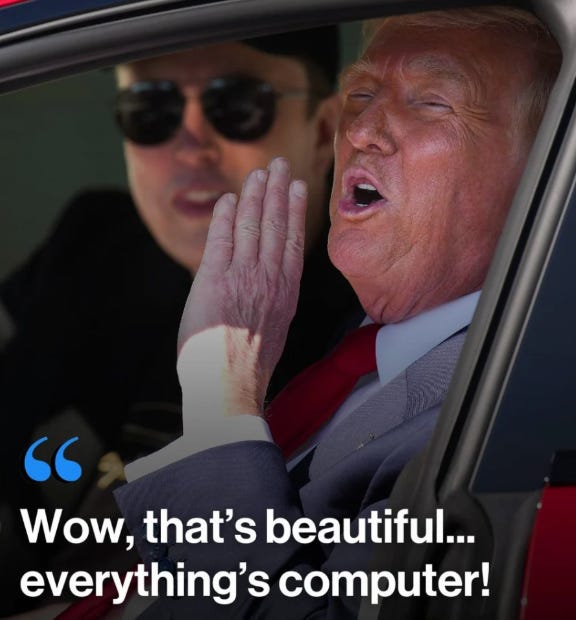
Reels are the final form of online media.
Everything ends up going the same way. Instagram became reel slop. YouTube became Shorts, which is isomorphic to reel slop. Snapchat has streaks which keep tweens hooked on sending selfies to each other at least once a day for 800 days straight. I’m surprised there aren’t reels on YouPorn at this point.
At a Google conference they boasted about serving 200 billion hours of short-form video last year. We should shun these people the way we shun Philip Morris executives.
TikTok is the final form of the social media slot machine. They didn’t add shorts backhandedly as a feature which is embedded in another app, or which you slide into effortlessly with a rogue tap. Shorts are the whole thing. That app is like having a gun in your house. A sign of things to come; industrial-grade digital poison on tap.
With poisons of antiquity we built up cultural antibodies, legislating and educating people on their harms. Only now are we starting to catch up with the damaging effects of social media, with more schools banning phones and more countries enacting social media bans.
I’m conflicted as to how beneficial bans on social media for young people are. The Online Safety Act is a great example of how this can go wrong – where adults are now required to submit to punitive age-gating to view e.g. a subreddit about cider. But I can certainly see a case for regulating apps which 1) have a clear danger of social contagion and 2) use weaponised algorithms to be maximally addictive. I think they have the potential to be uniquely harmful in a way that e.g. porn is not.
There’s something very sad about the way social media has gone. Early Facebook felt like a warm place: you shared photos with your friends, you posted on each other’s Walls, you planned parties and could look people up you met at events to flirt with them online because you were too shy to do it in person.
The writing was on the wall when people started to friend everyone on Facebook they ever met – the definition of friend changed to anyone you had the merest hint of a connection with. This has a cooling effect; suddenly you don’t want to share anything personal because you have a network of a thousand people who you barely know (including your parents; maybe that was the real death knell).
Some social media platforms tried to address this. The one that stands out to me is Google+, which let you organise your friends into ‘circles’ of decreasing connectedness, with the people you barely knew in the outer ring, letting you pick an audience with which to share depending on how intimate the content was.
Path is another. It was launched in 2010, co-founded by Shawn Fanning (the Napster guy) and ex-Facebook product manager Dave Morin, which capped your friend count to 150, aping Dunbar’s number. Unfortunately before it died they lifted this limit, the pressure to grow being greater than the pressure to stay small.
I think it’s an unsolved problem. I long for the old days where we could share things to an intimate, private audience, without your feed being injected with influencers on apps designed to maximise addictiveness on which you are “connected” to more people than any person can be friends with. Something like a more humane online garden.